

4th year of Degree in Foundations of Architecture
6 ECTS – Compulsory diversifiable course
Description and objectives
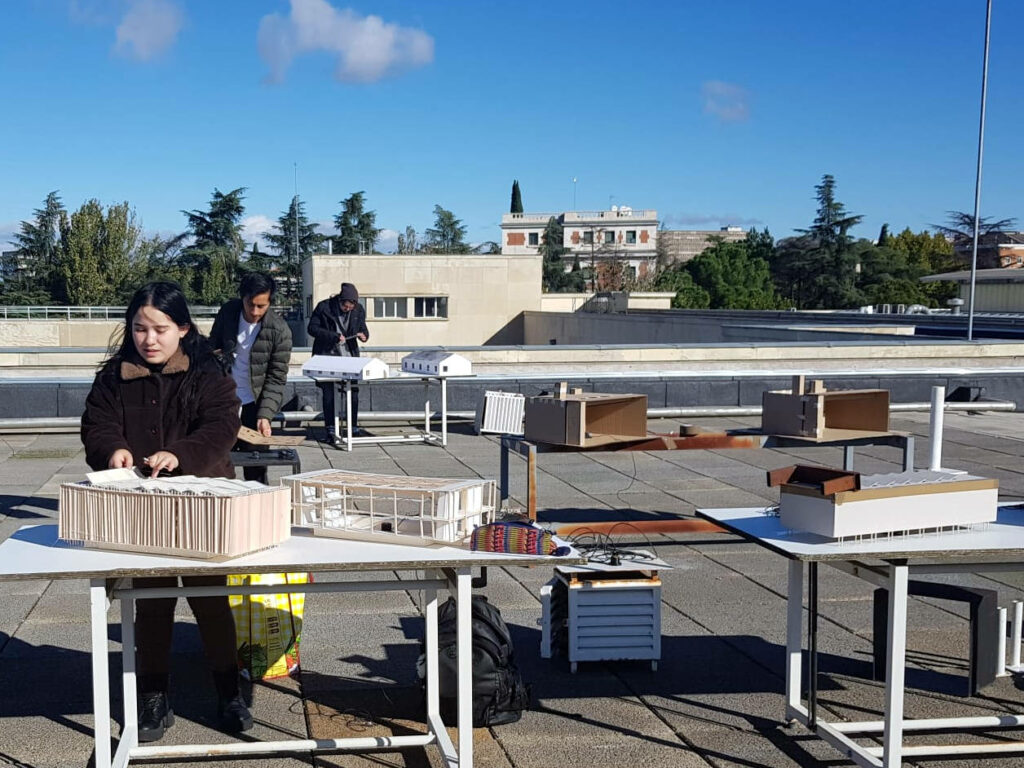
Given the importance of effectively utilizing natural light in buildings, this workshop is designed as a different form of learning that can serve as a starting point for the final project. It consists of a theoretical part (25%) in which the basic principles of lighting (solar geometry, sunlight exposure, etc.) are presented, and an experimental part (75%) in which models will be constructed, photometric sensors will be used, and lighting software will be employed.
The main objective of the workshop is to introduce students to the theory and calculation of Natural Lighting. After this activity, students should be able to: measure global illuminance in any space, experimentally determine the distribution of illuminance in a space, assess the utilization of natural light in a space, calculate the artificial lighting needed to meet the specifications of the Technical Building Code (CTE), and carry out a lighting project.
Course content
The Workshop will consist of the following subjects and activities:
25% THEORETICAL PART
- Solar geometry and sunlight exposure
- Basics of lighting. General concepts. Luminous magnitudes
- Natural lighting in buildings
- The climate and its influence on natural lighting
- Working methods in the field of lighting in buildings
- Presentation of lighting software programs
- Operation of measuring devices and data processing software
75% EXPERIMENTAL PART
- Research work in the field of lighting in buildings
- Construction of a scale model of the study subject (sports hall, museum, library, building, etc.)
- Illuminance measurements in the model with Li-21 photometric sensors
- Data processing and analysis Lighting simulation using DIALUX
- Results and conclusions
- Synthesis and presentation of the work
Teaching planning (subject table, academic calendar, and exam schedule…)
Workshop instructor
Prof. Mercedes González Redondo